Buying Guides
The best espresso machine for a small kitchen: measure your counter first
In a small kitchen the machine you want and the machine you can fit are often different, so the first specification to check is your own worktop.
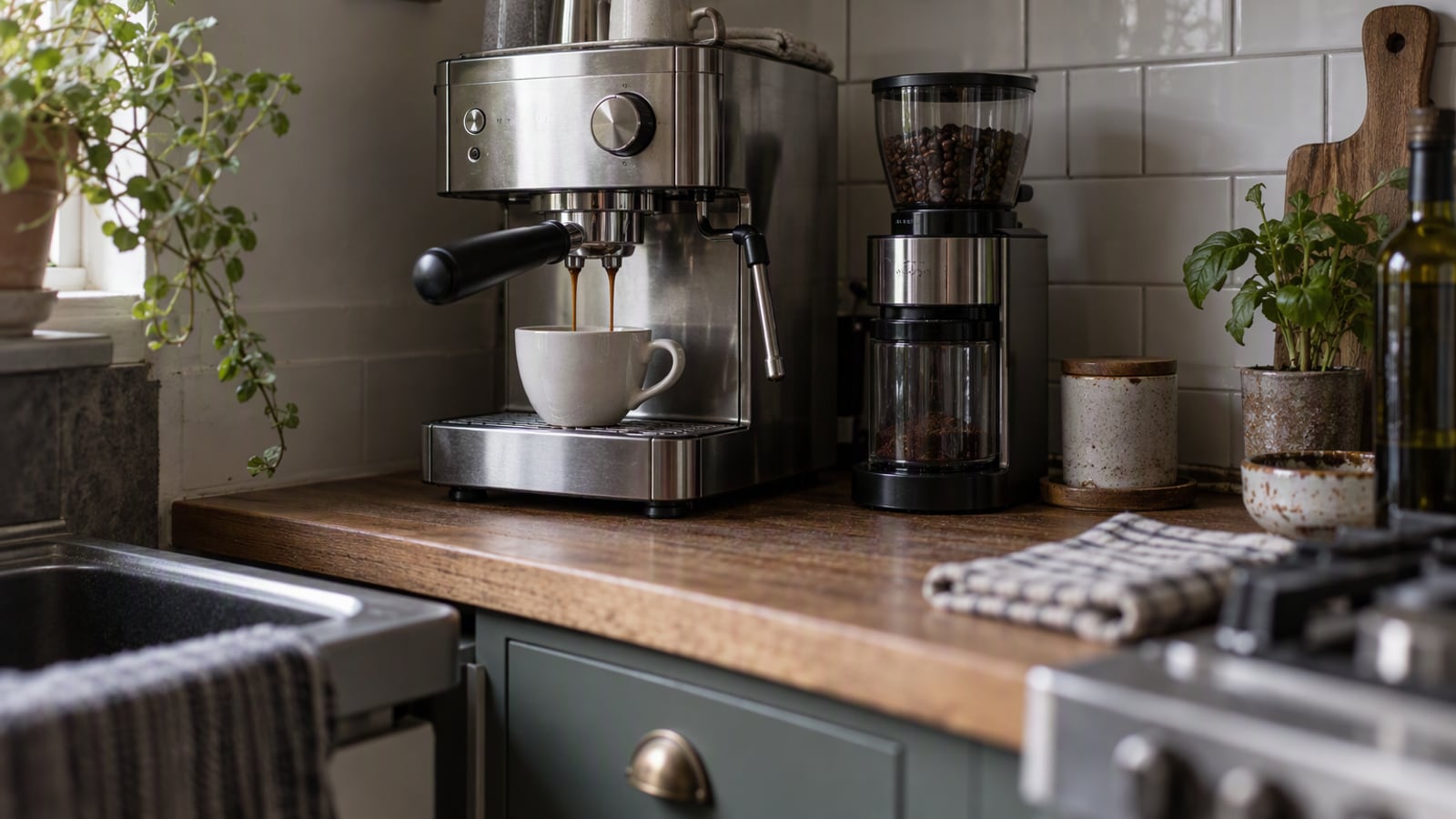
Small kitchens punish optimism. You find the perfect espresso machine, order it, unpack it, and then discover that it does not fit under the wall cupboard above the counter, or that it is so wide that the kettle now has to live on the floor. The machine is fine. The measurement was never taken.
This guide is written for that specific problem: how to choose an espresso machine for a genuinely small kitchen, where the limiting factor is not the coffee but the counter. ZeroToUs has not run a lab, and we have not pulled shots on these machines. Everything below is based on published specifications, manufacturer documentation, and the patterns that recur in owner reports.
How we picked
We did not test these machines, and we have not timed a shot or tasted a coffee from either of them. Instead we narrowed the field using three criteria that a specification sheet can support and a small kitchen will actually care about.
First, footprint. In a small kitchen, counter space is the scarcest resource, and a machine that does not fit is worthless regardless of how well it performs. Width, height and depth all matter, and height under a cupboard is the one people forget.
Second, how many appliances it replaces. An espresso setup needs a machine and, ideally, a grinder. If one box does both, you have saved a footprint. If it does not, you need room for two.
Third, the honest learning cost. Espresso rewards practice, and a machine with more variables demands more of it. A guide that recommends the most capable machine to a first-time buyer in a 15-centimetre-wide gap is not helping anyone.
We left out capsule machines deliberately. They are a legitimate answer to “I want coffee fast in a small space”, but they are a different product category, and treating them as espresso machines muddies the comparison.
The short list
- Breville Barista Express — the pick for a small kitchen where you want to grind fresh and can spare the footprint, because the grinder and machine share one box.
- De Longhi Dedica Style — the pick for a genuinely tiny kitchen, or one where you already own a grinder, because it is only 15 centimetres wide.
Two machines is a short list, but the decision in a small kitchen is genuinely binary. Either you want the grinder built in, or you do not, and the answer to that question decides which of these two you buy.
How to choose
Measure before you shop, and measure three dimensions. The width of usable counter, the height clearance under the cupboards, and the depth you can spare. A machine that is too tall for the gap is unusable. A machine that is too wide leaves no room to work. And depth matters more than people expect, because you need clearance to load the portafilter and to fill the water tank, which is often at the back.
Decide whether you want a grinder in the same box. This is the biggest fork in the road. A built-in grinder means fresh coffee and one footprint, which is exactly why the Breville suits a small kitchen where you do not already own a grinder. If you already own a good grinder, the slim De Longhi takes less counter and typically costs less, because you are not paying twice for grinding.
Be honest about the learning curve. The Breville Barista Express has a real learning curve in the first couple of weeks, and it needs a proper cleaning routine or the grinder clogs. The De Longhi is the easier machine to start on. If you want the ritual, buy the Breville; if you want the drink with less fuss, buy the De Longhi.
Check the height against your cupboards, not just the counter. This is the specification that ruins more purchases than any other. A machine can fit the counter perfectly and still be too tall to sit under a wall unit, which is common in small kitchens. Measure the gap, then check the machine’s height against it.
Think about where the water goes in. Refilling a tank that lives at the back of a machine wedged into a corner is a daily annoyance. If your only free counter is in a tight corner, favour the machine that is easiest to refill in place.
What not to overpay for
The first thing not to overpay for is capacity. A machine built to pull shot after shot for a queue of people is bigger, heavier and more expensive, and in a small kitchen it is the wrong shape for the room. Two people drinking a couple of coffees a day do not need commercial throughput.
The second is the pressure gauge, or rather, paying extra for one on a machine that will not reward it. The Breville Barista Express includes a pressure gauge, and it is genuinely useful because it teaches you to dial in a grind. That is a real benefit for someone who wants to learn. But if you have no intention of adjusting your grind, you are buying an instrument you will not read.
The third is a mop-up of features you cannot use in the space you have. A larger drip tray, a taller cup clearance, a bigger bean hopper: all of these are improvements in a big kitchen and liabilities in a small one. The De Longhi’s small drip tray fills quickly, which is a genuine annoyance, but the trade is a machine that fits under a low cupboard. In a small kitchen, that trade is usually the right one.
Breville Barista Express: the all-in-one for a small kitchen
The Barista Express is the pick for a small kitchen where you want to grind fresh, because the grinder is inside the machine. Breville specifies a built-in conical burr grinder, a 58mm portafilter, a steam wand and a pressure gauge. The practical effect is that one footprint replaces two appliances, which is the single most valuable thing a machine can do in a small kitchen. You are not finding room for a separate grinder that you then have to store.
The details hold up in daily use, on the evidence of owner reports. The pressure gauge is a teaching tool: it shows you what a correctly dialled grind looks like, which shortens the learning curve. Parts and gaskets are easy to buy, which matters for a machine you intend to keep. And having the grinder and the group head in one unit means the workflow is compact, with no shuttling between two machines on a narrow counter.
The tradeoffs are the learning curve and the maintenance. Breville’s own guidance and owner reports both point to a real learning curve for the first two weeks, and the machine needs a proper cleaning routine or the grinder clogs. That is not a defect so much as the cost of owning a grinder that shares a body with an espresso machine. It is also wider than the De Longhi, so measure before you commit.
Buy it if you do not own a grinder, you want fresh coffee, and you can spare the counter. Skip it if your counter is genuinely tiny, or if you want coffee without a routine.
De Longhi Dedica Style: the slim machine for a tiny kitchen
The Dedica is the pick when space is the binding constraint. De Longhi specifies a body just 15 centimetres wide, a thermoblock heating system, an adjustable steam wand, and both pressurised and non-pressurised baskets. The width is the headline: 15 centimetres is narrow enough to fit under a low cupboard and still leave you room to work, which is more than most espresso machines can claim. De Longhi also claims a heat-up of roughly 40 seconds, which is quick enough to make a coffee on a whim rather than planning around the machine.
It is also the better value if you already own a grinder. The Dedica does not include one, so you are not paying for grinding twice, and the machine itself is the cheaper route into real espresso. The adjustable steam wand means milk drinks are within reach, which suits a household that mostly drinks lattes and flat whites.
The compromises are about the ceiling rather than the floor. The pressurised basket is forgiving, which makes it a good starting point, but it hides poor grind quality and caps how good the shot can get: it is a ceiling, not a shortcut. If you use the non-pressurised basket instead, you are back to needing a good grinder and a bit of skill. The small drip tray also fills quickly, which is a genuine daily annoyance, though it is the price of the slim body.
Buy it if your kitchen is genuinely tiny, you already own a grinder, or you mostly drink milk drinks and want the simplest route in. Skip it if you want the best possible shot and are not willing to pair it with a good grinder, or if you would rather not empty a small drip tray often.
Frequently asked questions
What should I measure before buying an espresso machine? Three things: the width of usable counter, the height clearance under the wall cupboards above it, and the depth you can spare. A machine that is too tall for the gap under a cupboard is unusable, no matter how good it is, and a machine that is too wide leaves you nowhere to work.
Do I need a machine with a built-in grinder in a small kitchen? It is the better choice if you do not already own a grinder, because one footprint replaces two appliances. If you already have a good grinder, a slim machine without one takes up less counter and often costs less.
Is a pressurised basket better for beginners? It is more forgiving, because it hides inconsistencies in the grind, which is why it suits the De Longhi Dedica as a starting point. The trade is that it also caps how good the shot can get, so it is a ceiling rather than a shortcut to great coffee.
How much work is an espresso machine really? More than a capsule machine, and that is the honest cost. The Breville Barista Express in particular has a genuine learning curve and needs a cleaning routine or the grinder clogs. Buy one only if you want the ritual, not just the drink.
The products in this article
Destinations and specification notes were last checked on 2026-10-06. Prices change constantly, so always confirm on the brand's own page before buying.
Best all-in-one espresso setup for a small kitchen
Breville Barista Express Breville
Best for
Verified specifications
- Built-in conical burr grinder
- 58mm portafilter
- Steam wand
- Pressure gauge
What works
- Grinder and machine in one footprint, which matters in a small kitchen
- The pressure gauge teaches you to dial in a grind
- Parts and gaskets are easy to buy
What does not
- A real learning curve for the first two weeks
- Needs a proper cleaning routine or the grinder clogs
Best slim espresso machine if you already own a grinder
De’Longhi Dedica Style De’Longhi
Best for
Verified specifications
- Pressurised and non-pressurised baskets
- Slim 15cm body
- Thermoblock heating
- Adjustable steam wand
What works
- Only 15cm wide, so it fits under a low cupboard
- Heats in about 40 seconds
- Good value if you skip the grinder
What does not
- The pressurised basket hides bad grind quality but caps how good the shot can get
- Small drip tray fills quickly
Sources
More from Home Tech
 Home Tech
The best air purifier for a small apartment, and the one spec that actually matters
Most air purifier shopping is decided by a filter label. The number that decides whether the machine actually cleans your flat is a different one.
 Home Tech
The best robot vacuum for pet hair in 2026: what to buy and what to skip
For pet hair, the specification that matters is not suction. It is what happens to the hair once it reaches the brush.
 Home Tech
Roborock Qrevo Curv review: the first robot vacuum that stopped me picking hair off a brush
The Qrevo Curv is aimed at the two jobs owners hate most, and on paper it is the right answer for a home full of hair.