The Minimalist Accessories Guide: Less Is More
Affiliate Disclosure: This post contains affiliate links. If you purchase through these links, we may earn a commission at no extra cost to you.
There’s a particular kind of confidence that comes from wearing exactly the same earrings every day. Not because you’re lazy — because you’ve found the piece that makes every outfit feel complete. That’s the philosophy behind minimalist accessorizing: a few, high-quality pieces you wear constantly rather than a drawer full of pieces you wear occasionally.
The minimalist approach isn’t about deprivation. It’s about identifying the accessories that do the most work in your wardrobe and investing in the best version of them. Here’s how to build a focused collection that simplifies your morning routine without sacrificing style.
The Essential 7
1. Gold Hoops (Medium Size)
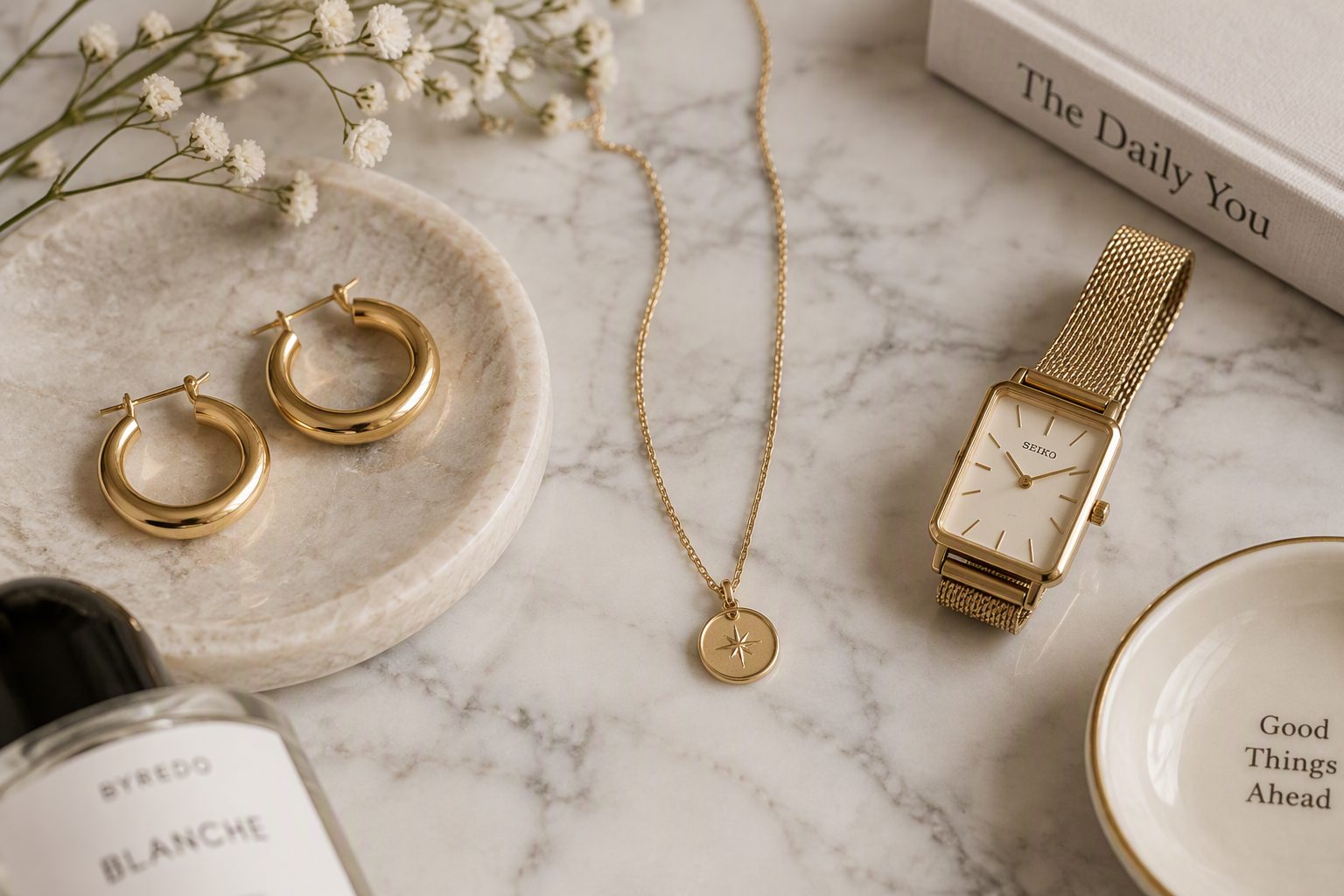
If you could only own one pair of earrings for the rest of your life, make it medium-sized gold hoops. They frame the face, add polish to any outfit, and go with literally everything. A medium hoop (about 1 inch in diameter) is the sweet spot — larger than a huggie, smaller than a statement hoop.
Material: 14k gold-filled or solid gold. Gold-filled means a thick layer of gold is bonded to a base metal — it won’t tarnish or flake like gold-plated. If you have sensitive ears, this is the minimum acceptable material.
2. A Fine Chain Necklace
A delicate chain with a small pendant (or no pendant at all) is the necklace equivalent of a white t-shirt — it works every day, with everything. The chain should be thin enough to layer with other pieces if you want, but visible enough to stand on its own.
Length: 16-18 inches is the most versatile. It sits at the base of the throat — visible above a collar, but not choker-tight.
3. A Structured Leather Tote
One good leather tote bag does the work of five cheap ones. It holds your laptop, water bottle, makeup bag, and everything else you carry daily, and it looks better with age. Choose a structured shape that holds its form — slouchy leather looks casual, structured leather looks professional.
Color: Black is the most versatile. If you wear mostly earth tones, cognac or tan works. If you have another bag for daily use, a camel-colored tote adds variety.
4. A Classic Belt
A brown or black leather belt with a simple buckle is the kind of accessory you don’t notice until it’s missing — and then it’s all you see. The belt should match or complement your shoes (brown belt with brown shoes, black with black). A 1-inch width works for jeans; a 3/4-inch for trousers.
Buy once: Spend $30-60 on a full-grain leather belt and you won’t buy another for 10 years. Cheap belts crack, crease, and look sloppy within months.
5. A Silk Scarf
This is the piece that takes a simple outfit and makes it interesting. A silk scarf tied around the neck (French-girl style), knotted on a handbag, or used as a headband adds a pop of color and pattern that elevates basics.
Size: A 27-inch square is the classic size — large enough to tie, small enough to be delicate. Choose a print you love — floral, geometric, or abstract.
6. Everyday Sunglasses
Don’t underestimate the style power of sunglasses. The right pair adds instant polish to a bare face and messy bun. Choose a shape that complements your face — rounder faces benefit from angular frames, and vice versa.
7. A Watch (or a Bracelet That Looks Like One)
Your wrist is valuable real estate. A simple watch or a structured bracelet fills that space and adds an intentional finishing detail to every outfit. You don’t need anything expensive — just intentional.
How to Build a Minimalist Accessory Collection
Start with What You Wear Most
Before buying anything new, look at your current accessories. Which do you reach for daily? Which sit in a drawer? Your “daily wear” pieces are your minimalist collection — those are the ones worth upgrading.
Invest in Versatility
Every accessory should work with at least 80% of your wardrobe. If it only works with one outfit — like red-carpet-style chandelier earrings — it doesn’t belong in a minimalist collection. That’s a special-occasion piece, not an everyday one.
Choose Metal Consistently
Pick one metal tone — yellow gold, white gold, or rose gold — and stick with it. When all your jewelry is the same tone, pieces layer beautifully and the collection looks intentional. Mixing metals is a high-skill styling move — skip it for the minimalist approach.
Quality Over Quantity
One pair of solid gold hoops worn daily is better than ten pairs of inexpensive earrings that you swap out constantly. Higher quality also means fewer replacements, fewer skin reactions, and a more polished look.
Consider Your Lifestyle
If you work with your hands, skip rings and choose bracelets instead. If you’re around children, avoid dangly earrings. If you travel frequently, versatile accessories that pack flat are essential. Build your collection around your actual life, not an idealized version of it.
The Layering Rule
Minimalist doesn’t mean one piece at a time. The art is in the layering:
- Medium hoops + fine chain necklace = everyday polish
- Add a silk scarf = café in Paris vibe
- Add a chunky bracelet = evening out
- Add layered delicate necklaces = cool-girl editorial
The key is that each piece is simple enough not to compete with the others. Complexity comes from combinations, not from individual pieces.
Common Minimalist Mistakes
Buying too small: Tiny, too-delicate pieces get lost visually and feel insubstantial. Even minimalist jewelry should have presence.
Choosing trends over classics: The whole point is that these pieces never go out of style. A link-chain necklace is classic; a chunky resin choker is not. Stick with timeless designs.
Neglecting care: Polish your metal pieces regularly, store them in lined containers (not a jumbled pile), and protect leather goods with conditioner. Quality only lasts if you care for it.
The Freedom of Less
When I finally committed to a minimalist accessory collection, I noticed something unexpected: I got time back. No more standing in front of the jewelry box weighing options. No more changing earrings because they didn’t look right with the top I ended up choosing.
I put on the same hoops, the same chain, the same watch, and I’m done. The pieces are beautiful, well-made, and always appropriate. And isn’t that what we want from our accessories — to make the outfit feel finished without making us think too hard?
Less really is more — but only when the “less” is chosen well.