Buying Guides
The best noise-cancelling headphones for commuting, picked by the noise you actually face
The right commuter headphone depends less on which one cancels the most and more on whether you are fighting an engine, a carriage of conversation, or a phone call.

Commuting noise is not one thing. Stand on a platform at 07:40 and you get a low rumble from the tracks, an announcement you cannot parse, and a group of people talking directly behind you. Sit down and the rumble changes pitch while the talking stays and someone else’s headphones leak. Walk the last ten minutes and a bus, a building site and a delivery van take over.
No single headphone is best at all of it, which is why this guide is organised around the noise rather than around a ranking. Two of the four picks are over-ear and two are in-ear. The reason to choose one over the other usually has nothing to do with which cancels more and everything to do with what you are willing to put in your ears for ninety minutes a day, five days a week.
One thing before we start. ZeroToUs has not run a lab and has not handled any of these products. Nothing below is a measurement, and no figure here is ours.
How we picked
We started from published specifications rather than from a test bench. For each candidate we read the manufacturer’s own description of what the product is for — its construction, its approach to noise cancelling, its connectivity and its case — and then cross-checked that against the recurring themes in owner reports. Where a number appears, it is a manufacturer’s claim and we label it as one.
We deliberately did not rank these by a single “best noise cancelling” measure. Cancellation varies with the frequency of the noise, so a headphone that is excellent against a jet engine can be merely good against a carriage of conversation, and the reverse is also true. Instead we matched each product to the scenario its own specification is clearly aimed at, and we kept the tradeoff visible in every entry rather than hiding it behind a winner’s badge.
We also excluded anything that cannot survive a real commute. A product that needs a desk, a stand or a wired connection is not a commuting product, however good it sounds.
The short list
The Sony WH-1000XM6 is the default for a mixed commute: a train, then an open-plan office, then a desk. The Bose QuietComfort Ultra Headphones is the pick when the noise is constant and the journey is long, because comfort over eight hours is the entire point of that design. The Apple AirPods Pro 3 is the one to choose if you are on iPhone and take a lot of calls, since its microphone work is the strongest in this group. The Sony WF-1000XM5 is the Android answer, and the only true wireless pair here making a serious claim to the best in-ear cancellation.
How to choose
Match the headphone to the noise, not to the brand. Constant low-frequency noise — engines, ventilation, track rumble — is the easier problem, and most premium products handle it. Speech is the hard one, because it moves around in frequency and starts and stops unpredictably. If your commute is a quiet carriage with two loud talkers, prioritise a closed-back over-ear with a good seal rather than the model with the most enthusiastic marketing.
Decide what you will tolerate in your ear canal. In-ear models isolate well and pack small, but they sit inside you for the whole journey and the seal is everything. If you have small ears, the AirPods Pro 3 is explicitly designed around that problem. If you dislike the sensation of a tip in your ear at all, no specification will fix it and an over-ear is the honest choice.
Count your devices before you count features. If one pair has to serve a work laptop and a personal phone, multipoint pairing matters more than any audio mode. The Sony WH-1000XM6 and the Bose both specify it. Without it, you will be re-pairing in a doorway with your bag on your shoulder.
Weigh the case as heavily as the sound. A headphone you leave at home cancels nothing. In-ear models win outright here: the AirPods Pro case is specified to fit a coin pocket, while the Sennheiser alternative in this class is noted for a case that is bulky for a bag. If you carry a small bag, that is a deciding factor rather than a footnote.
Treat battery as a habit, not a figure. Bose claims up to 24 hours per charge and the Sony WF-1000XM5 claims eight hours from a much smaller body. What matters is whether the charging habit fits your week. A long battery is only useful if you remember to plug in; a short one is fine if the case tops it up in your pocket between trains.
What not to overpay for
Immersive or spatial audio modes. Both the Bose and the AirPods Pro 3 specify a spatial-style feature. It is pleasant with a film and largely irrelevant on a commute, where interruptions and a noise floor mean you are not doing critical listening. Do not let it move your decision.
Hi-res codec support you cannot use. The Sony WF-1000XM5 specifies LDAC, which is a genuine advantage on Android and worth nothing on an iPhone. Paying for a codec your phone cannot transmit is paying for a specification rather than an experience.
Premium materials and finish. Metal and leather feel better and cancel no more noise. If your budget is finite, spend it on the seal and the comfort, which are the two things you feel every single day.
The newest generation by default. In this category the previous model often still cancels noise well, and the current flagship rarely discounts much. Unless a specific new feature is why you are buying, the older generation is usually the better value.
Sony WH-1000XM6: the default for a mixed commute
Sony’s specification places this headphone against engine drone as well as office chatter, which is precisely the mixed commute: train, then open-plan office, then desk. Multipoint pairing lets it hold a laptop and a phone at once, so a call interrupts your audio without a re-pairing ritual. It is specified as over-ear and closed-back with a foldable carry case, and owner reports consistently describe it as comfortable enough to leave on through a working day.
The tradeoffs are specific rather than vague. It sits in the premium price tier and rarely discounts much. More annoyingly, the earcup surface is a touch panel, so adjusting or removing the headphones can trigger a command you did not intend. If you handle your headphones constantly, that will grate every day. It is still the best single answer for the widest range of commuting noise.
Bose QuietComfort Ultra Headphones: for flights and constant noise
Bose’s own framing is isolation, and its specification leads with the lightest clamp force of the premium over-ears — a claim that matters on an eight-hour flight far more than on a twenty-minute bus ride. Its noise cancelling is still described as the reference for constant low-frequency noise, and it specifies up to 24 hours per charge, an immersive audio mode and an aware mode for when the platform announcement matters.
Two things to accept before buying. The companion app is required for basic setup and firmware, which is friction if you prefer a headphone that works straight out of the box. And the tuning is deliberately calm rather than detailed, so it flatters a podcast and slightly blunts a dense mix. Buy it for the flight, not for the mastering.
Apple AirPods Pro 3: for iPhone owners who live on calls
If your commute involves taking calls, the specification here is unusually clear: microphone quality is the strongest in this class, and switching between Apple devices is seamless. The case is compact enough to fit a jeans coin pocket, which is the biggest practical advantage of in-ear over over-ear. The tips are silicone, worth noting if you dislike the foam feel of Sony’s in-ears.
The catch is ecosystem-bound. The best features are Apple-only, so Android buyers lose most of the value, and battery life trails the best Android rivals. There is also a hearing-health feature set that is genuinely useful and entirely beside the point on a train. For an iPhone owner who talks for a living it is the pick; for anyone else it is an expensive way to buy half a product.
Sony WF-1000XM5: for Android users who want the smallest package
This is the only true wireless pair here making a serious claim to the best in-ear cancellation available, and for Android owners it adds LDAC support, which is a real improvement over standard Bluetooth streaming. Eight hours per charge is specified, and the companion app offers deep EQ control if you would rather retune them than accept the factory sound.
Two cons are on the record. The case is larger than Apple’s, which undercuts some of the pocket advantage of going in-ear at all. And the foam tips need replacing more often than silicone, so there is an ongoing cost and a small maintenance habit. Neither is a reason to avoid it; both are reasons to know what you are buying.
Frequently asked questions
Do over-ear headphones always cancel more noise than earbuds?
Not automatically, but the design favours them. A closed-back over-ear has more material and a larger seal around the ear, which helps before any electronics are involved. The Sony WF-1000XM5 is the in-ear exception worth knowing about, since its cancellation is the strongest claim in that category. The deciding question is still what you will happily wear for ninety minutes.
Is multipoint pairing worth choosing a headphone for?
If you carry one pair between a laptop and a phone, yes. It removes a re-pairing step several times a day, which is a small thing you notice constantly. If you only ever connect to one device, ignore it entirely.
Can I use these on a plane if I also need to hear announcements?
Look for an aware or transparency mode. Bose specifies an aware mode, and the Sony and Apple options both offer pass-through behaviour. None of them replaces taking the headphones off when a crew member speaks to you.
Should I wait for the next generation?
Only if a specific feature you need is missing. Noise cancelling has been good enough for a commute for several generations, and the flagship tier rarely discounts much. If you are replacing a five-year-old pair, the improvement will be obvious whichever you choose now.
The products in this article
Destinations and specification notes were last checked on 2026-10-06. Prices change constantly, so always confirm on the brand's own page before buying.
Best noise cancelling for a daily commute
Sony WH-1000XM6 Sony
Best for
Verified specifications
- Over-ear, closed back
- Adaptive noise cancelling
- Multipoint pairing
- Foldable carry case
What works
- Noise cancelling holds up against engine drone, not just office chatter
- Comfortable enough to leave on through a working day
- Multipoint pairing switches cleanly between laptop and phone
What does not
- Premium price, and it rarely discounts much
- Touch controls are easy to trigger accidentally when you adjust the earcup
Best for pure isolation on a plane
Bose QuietComfort Ultra Headphones Bose
Best for
Verified specifications
- Over-ear, closed back
- Immersive audio mode
- Aware mode
- Up to 24 hours per charge
What works
- The lightest clamp force of the premium over-ears, so it survives an eight-hour flight
- Noise cancelling is still the reference for constant low-frequency noise
What does not
- The app is required for basic setup and firmware
- Sound is tuned for calm rather than detail
Best for iPhone owners who take a lot of calls
Apple AirPods Pro 3 Apple
Best for
Verified specifications
- In-ear, silicone tips
- Active noise cancelling
- Adaptive audio
- Hearing health features
What works
- Seamless switching across Apple devices
- Microphone quality is the strongest in this class for calls
- Compact case fits a jeans coin pocket
What does not
- The best features are Apple-only, so Android buyers lose most of the value
- Battery life trails the best Android rivals
Best Android earbuds for noise cancelling
Sony WF-1000XM5 Sony
Best for
Verified specifications
- In-ear, silicone tips
- Active noise cancelling
- LDAC support on Android
- Eight hours per charge
What works
- The best noise cancelling available in a true wireless earbud
- Deep EQ control if you want to retune them
- LDAC gives Android users better-than-AAC streaming
What does not
- The case is larger than Apple’s
- Foam tips need replacing more often than silicone
Sources
More from Audio
 Audio
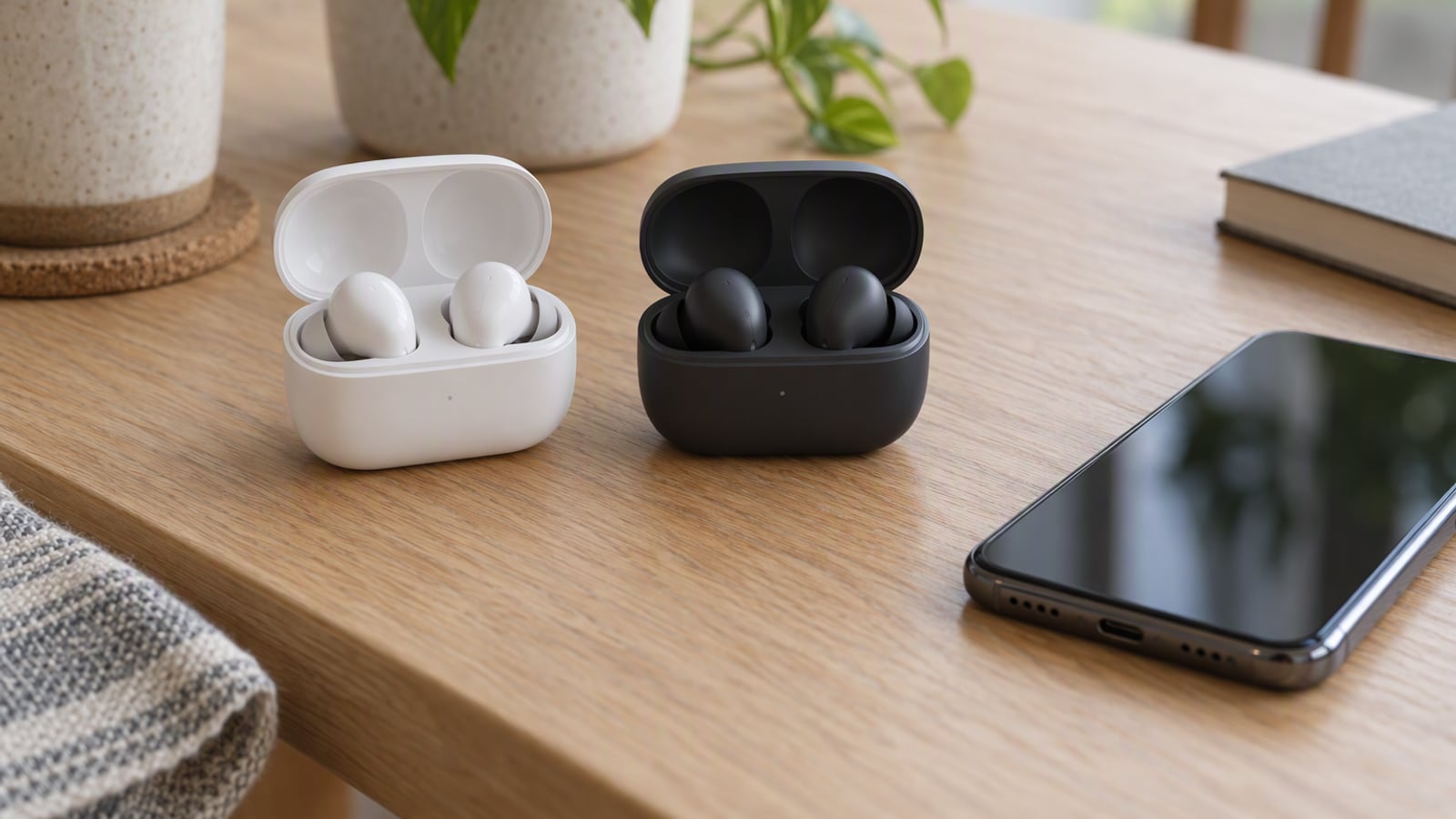
AirPods Pro 3 vs Sony WF-1000XM5: which earbuds for a genuinely loud commute
Both of these earbuds are excellent, and the choice between them is decided by the phone in your pocket long before you reach the specification table.
 Audio
Sony WH-1000XM6 review: the commuter's default, and the one flaw that follows you onto a plane
Sony's flagship over-ear is the most complete commuter headphone you can buy without checking the price first, as long as you can live with the earcup controls.
 Wearables
Apple Watch Series 11 vs Garmin Venu 3: smartwatch or sports watch
These two watches are not rivals so much as different answers to the same question: do you want a phone on your wrist, or a coach that lasts a fortnight?